← All traditions

Manga: from Hokusai's sketchbooks to the weekly black-and-white page

How a word for random sketches became Japan's mass medium — via Meiji newspaper strips, children's magazines, Tezuka's cinematic page and the screentone studio.

Chess2Story Research ·

Tradition
Manga — Japanese story comics, printed in black and white
Era
Word in print by the 1790s; newspaper strips from 1902; story manga from 1947
Key artists
Katsushika Hokusai · 1760–1849Charles Wirgman · 1832–1891Kitazawa Rakuten · 1876–1955Okamoto Ippei · 1886–1948Tagawa Suihō · 1899–1989Osamu Tezuka · 1928–1989Yoshihiro Tatsumi · 1935–2015Takeshi Obata · born 1969
Works to know

Katsushika Hokusai, Hokusai Manga (15 volumes) (1814–1878) — Woodblock-printed sketchbooks of people, animals and things, sold as a drawing manual and read for pleasure. The last volumes appeared after Hokusai's death.

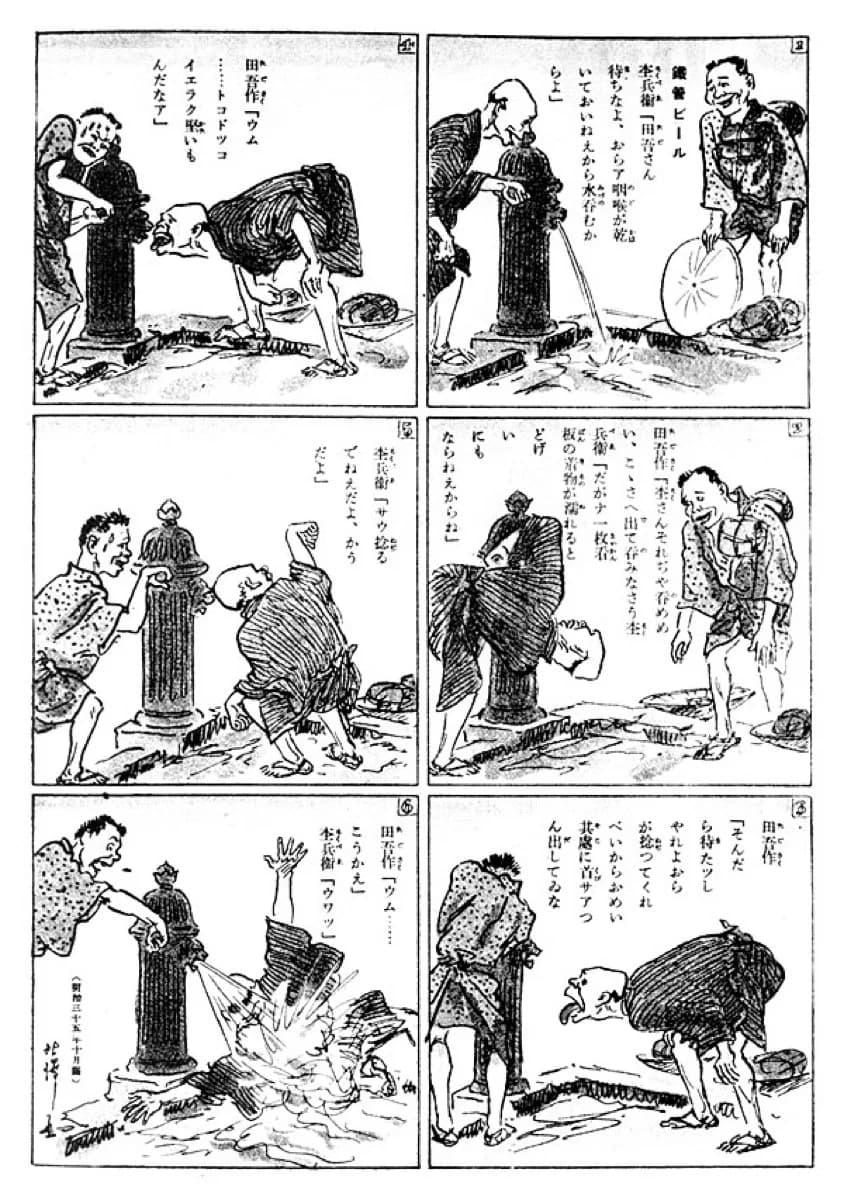
Kitazawa Rakuten, Tagosaku to Mokubē no Tōkyō Kenbutsu (Tagosaku and Mokubē's Tokyo Sightseeing) (1902) — Two country visitors, a fire hydrant and a soaking, in six numbered panels — often cited as the first Japanese comic strip with recurring characters.

Osamu Tezuka, Shin Takarajima (New Treasure Island), with Sakai Shichima (1947) — A cheap Osaka 'red book' whose opening car chase, told across several panels, is the conventional starting point of postwar story manga.

Osamu Tezuka, Tetsuwan Atomu (Astro Boy) (1952–1968) — The robot boy whose round face and large eyes became the international picture of what manga looks like.

Yoshihiro Tatsumi, A Drifting Life (2008) — Tatsumi's autobiographical account, in gekiga form, of the rental-book years 1945–1960 in which gekiga was invented.

Riyoko Ikeda, The Rose of Versailles (1972–1973) — The shōjo landmark: decorative, overlapping layouts and large luminous eyes on a historical epic.

Yumi Hotta and Takeshi Obata, Hikaru no Go (1998–2003) — A boy haunted by the ghost of a Go master. Credited with setting off a Go boom among young readers in Japan.

Tsugumi Ōba and Takeshi Obata, Death Note (2003–2006) — A duel of two minds in which almost nothing physically happens: the drama is carried by faces, solid blacks, tone and inner monologue.

Chika Umino, March Comes in Like a Lion (2007–) — A shogi manga built on quiet: small players in wide white rooms, then a single hand placing a piece.

Manga is the Japanese word for comics, and in Japan it names a mass medium read at every age: stories serialised a chapter at a time in thick, cheap magazines, then collected into paperback volumes, and printed almost entirely in black and white. The word is older than the form. Manga — "whimsical" or "random pictures" — was in print by the 1790s, and Katsushika Hokusai made it famous with the sketchbooks he published under that title from 1814. Those volumes were not comics. The older picture traditions often named as ancestors — the comic animal scrolls of the medieval temples, the kibyōshi picture-books of Edo in which text and image shared every page, the caricature albums called toba-e — supplied attitudes and habits. The comic strip itself arrived from the West.

From satirical magazine to story page

It arrived through satire. Charles Wirgman's Japan Punch, published in Yokohama from 1862, and Georges Bigot's Tôbaé (1887) taught a generation the Western cartoon, and the Japanese press answered within a few decades. Kitazawa Rakuten edited Jiji Manga, the comic supplement of the Jiji Shinpō, from 1902 and founded the colour satirical magazine Tokyo Puck in 1905. His 1902 strip of two country visitors and a Tokyo fire hydrant already holds the grammar of a page: equal ruled panels read in a set order, dialogue lettered into the picture, and a single burst saved for the punchline.

Through the Taishō and early Shōwa years, cartooning split into newspapers and magazines. Okamoto Ippei, at the Asahi Shimbun from 1912, joined drawings to short essays in the manga-manbun and trained younger cartoonists. Children's magazines — Shōnen Kurabu for boys, Shōjo Gahō for girls — carried illustrated serials; Tagawa Suihō's Norakuro (1931–41) was the era's landmark strip. In wartime the profession was consolidated, and from 1940 a magazine titled Manga served the government-aligned cartoonists' association.

How a manga page is made: pen, ink and screentone

The modern page is a studio product, and its look is the trace of its tools. It begins as a nēmu, a rough thumbnail of panels and dialogue that fixes the rhythm of the page before any finished drawing. The artist then pencils on manuscript paper — heavy, smooth white sheets, usually Kent paper cut to B4 for professional work, pre-printed in non-reproducing blue with the panel area, the trim and the bleed.

Inking is done with dip pens and black India ink. The G-pen, a flexible steel nib, swells under pressure and tapers to a hairline as it lifts; it draws the figures. The maru-pen, or mapping pen, draws hair, eyelashes and distant detail, and run along a ruler it makes speed lines; pivoted on a pin set at one point, it makes focus lines that converge on whatever matters. Large areas of solid black, beta, are marked with an × and filled with a brush, often by an assistant, and opaque white restores highlights inside them.

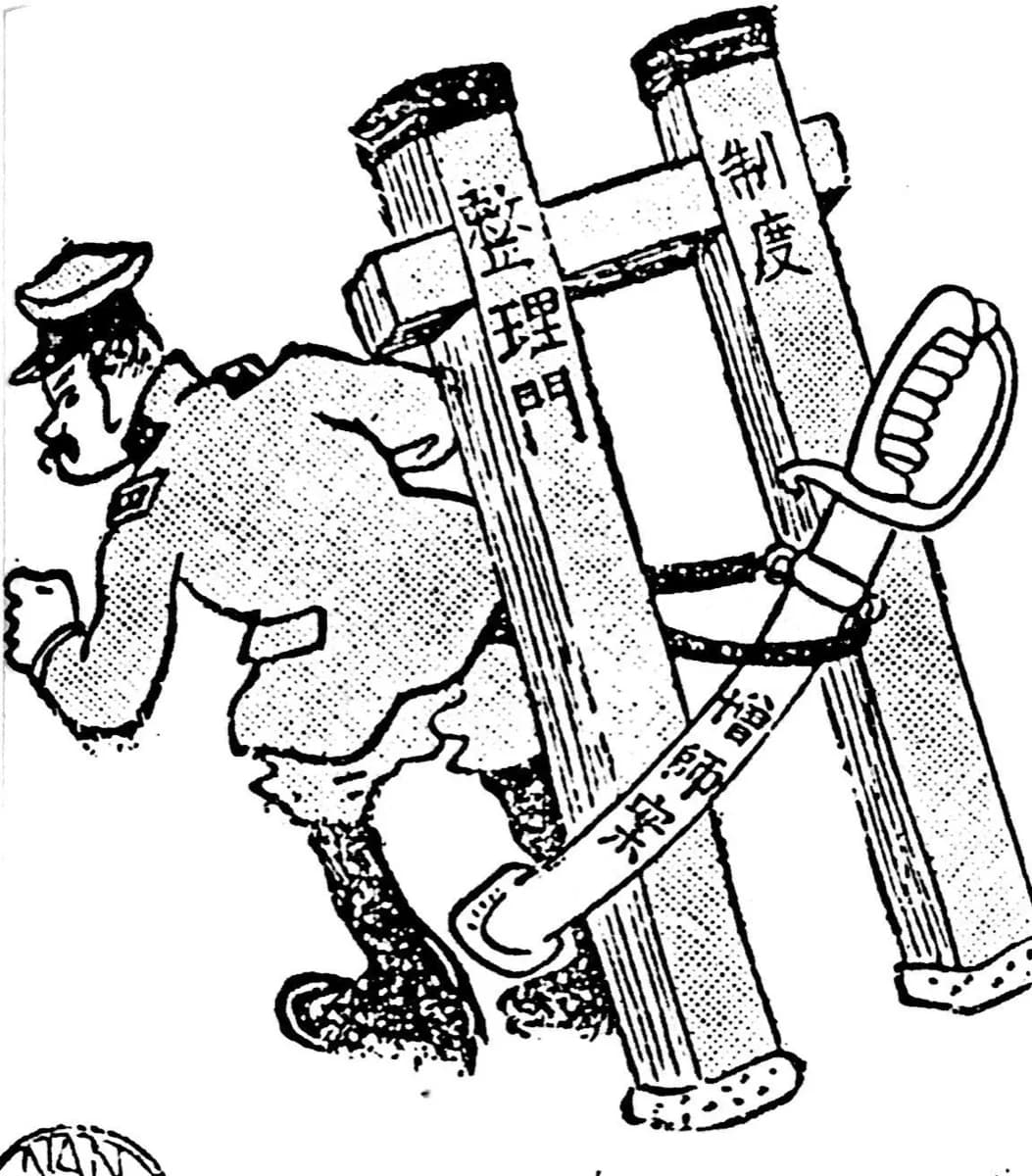
Grey comes from screentone: transparent adhesive sheets printed with dots or lines. The sheet is laid over the inked drawing, cut to shape with a craft knife, peeled away outside the line and burnished down, so a coat or a wall prints as a flat grey that stops hard at its contour. Scratching the tone with a blade makes glints. The idea is older than the product — Japanese newspaper cartoons were already filling shapes with mechanical dot screens in 1912. Dialogue, by contrast, is typeset into the balloons by the editorial office, while sound effects are drawn by hand as part of the picture.
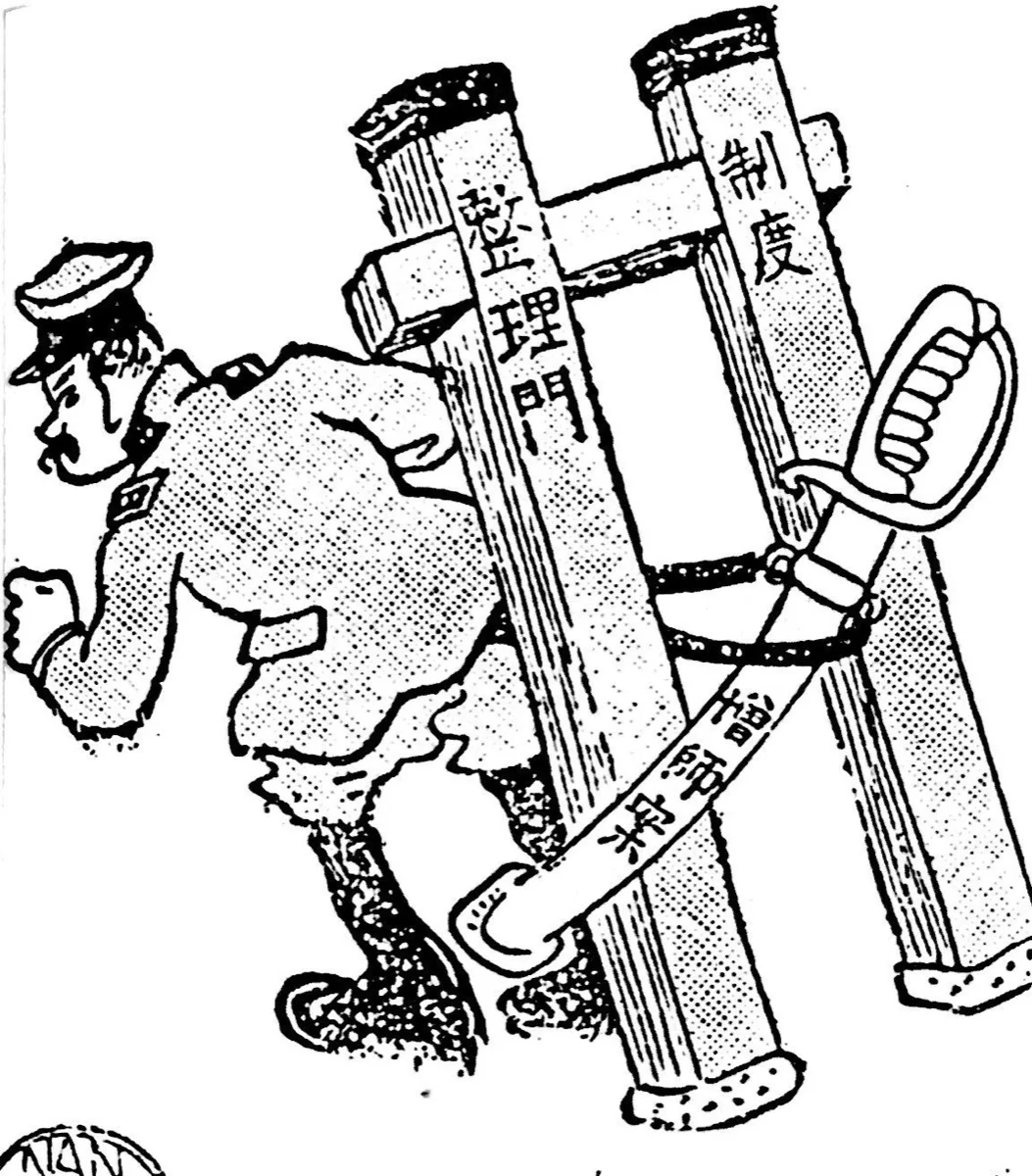
Shidō Nanten, newspaper cartoon, 1912 — an officer and a gate filled with a flat mechanical dot screenShidō Nanten, cartoon in the Jiji Shinpō, November 1912. Via Wikimedia Commons, public domain.

The finished pages run weekly or monthly in magazines printed on cheap paper, then return as a tankōbon, the collected paperback that keeps a series in print. Since the 2000s most professionals draw in software that simulates the same kit — pressure-tapered pen, beta, tone at a stated dot ruling — so the printed look has barely changed.

The artists who changed the page

Osamu Tezuka is the conventional starting point of postwar story manga. Shin Takarajima (1947), drawn from Sakai Shichima's story and sold as a cheap Osaka "red book", broke one action into a sequence of film-like shots, and Astro Boy fixed the large-eyed face the world still associates with the medium. Yoshihiro Tatsumi pushed the other way: in 1957 he named gekiga, "dramatic pictures", for adult stories drawn for the rental-book shops — realist anatomy, heavy blacks, wide silent panels.

The weekly magazines followed: Weekly Shōnen Magazine and Weekly Shōnen Sunday in 1959, Shōnen Jump in 1968, weekly from 1969. Their deadlines produced the assistant-staffed studio, and their audiences produced the registers still used today — shōnen for boys, shōjo for girls, seinen for adult men. By the 2000s Takeshi Obata's pages for Death Note showed how far the black-and-white page could carry a story in which almost nothing physically happens: a thriller of two minds told through faces, solid shadow, tone and inner monologue.

Afterlife

Manga became the main source material for Japanese animation — on television from Astro Boy, the first weekly half-hour anime series, in 1963 — and from the 1980s it reached readers abroad, first in translations flipped to read left to right and later in editions that keep the Japanese right-to-left order. It also proved that a game of pure thought can be drama. Hikaru no Go set off a Go boom among young readers in Japan; March Comes in Like a Lion stages shogi as long silences broken by the click of a piece; Blitz, written by Cédric Biscay and drawn by Daitarō Nishihara, brought the same treatment to chess. Postwar manga remain in copyright, so the plates on this page stop before 1947.

From the tradition to the board

The Chess2Story Manga comic style is built on this modern black-and-white page: inked contours, solid blacks, flat screentone, focus lines saved for the moment a piece lands, and quiet wide panels between the blows. It draws on the board-game manga in particular — where a move is a hand, a face and a silence — and turns your game's pieces into the cast: the move that decided your game drawn as approach, contact and a face that knows it.
See the real works

Kitazawa Rakuten, Tagosaku and Mokubē's Tokyo Sightseeing, 1902 — a black-and-white comic strip of six equal ruled panels in two columns, two men in striped and dotted kimono around a cast-iron fire hydrant, vertical Japanese dialogue set directly in the open paper of each panel, and in the last panel a jet of water bursting into a splash over one of them
Kitazawa Rakuten, Tagosaku to Mokubē no Tōkyō Kenbutsu (Tagosaku and Mokubē's Tokyo Sightseeing), 1902, from the Jiji Manga supplement of the Jiji Shinpō. Six equal panels, each numbered in its top corner, the numbers running down the right-hand column first. Dialogue is vertical kana in the open paper, named for its speaker and opened with a quotation bracket — no balloons. Pattern is drawn, not printed: the striped kimono is ruled hatching, the yukata scattered dots. The strip spends its one burst, a ragged splash where the hydrant's jet strikes, in the final panel, which carries the date and signature. Via Wikimedia Commons, public domain.→
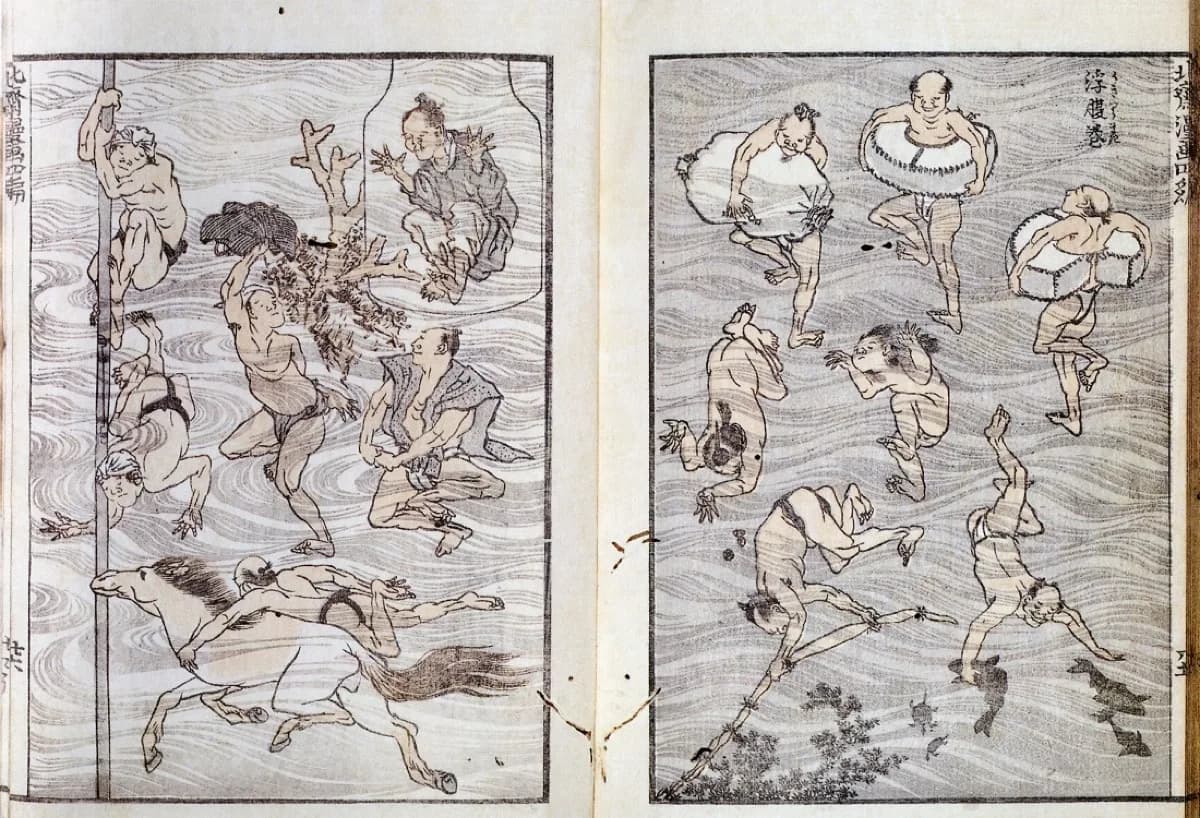
Katsushika Hokusai, Hokusai Manga volume 4, 1816 — a double page of more than a dozen swimmers and divers, some on floats, one gripping a pole, and a horse, tumbling in every direction over a ground of flowing wave lines, printed in black line with pale grey and pink
Katsushika Hokusai, Hokusai Manga vol. 4, 1816: a double page of swimmers. More than a dozen bathers and a horse turn at every angle across a ground of flowing wave lines — seen from above, below and behind, several buoyed by floats. There are no panels and no story; what the sketchbooks hand on is the body in motion from any side, and the word manga itself. Woodblock-printed book, via Wikimedia Commons, public domain.→
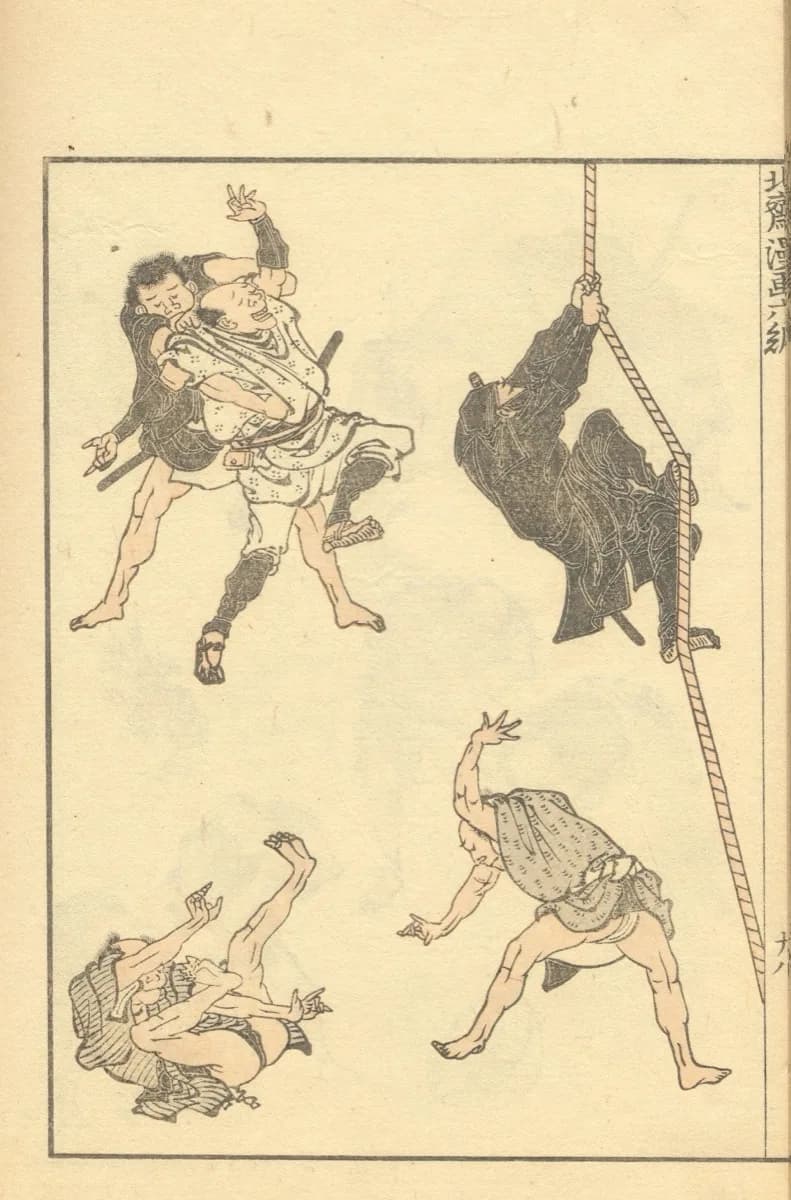
Katsushika Hokusai, Hokusai Manga volume 6, 1817 — a single framed page with two men locked in a grapple, a figure in a near-black garment climbing a rope, two men tumbling on the ground and a man lunging with arms thrown out
Katsushika Hokusai, Hokusai Manga vol. 6, 1817. Four studies of bodies under strain on one framed page: a grapple, a rope-climber whose dark garment is a single flat mass with its folds left as pale lines, a pair tumbling, a man lunging. The grappler's eyes are squeezed to curves over a clenched mouth — the effort face the comic page still draws. Via Wikimedia Commons, public domain.→
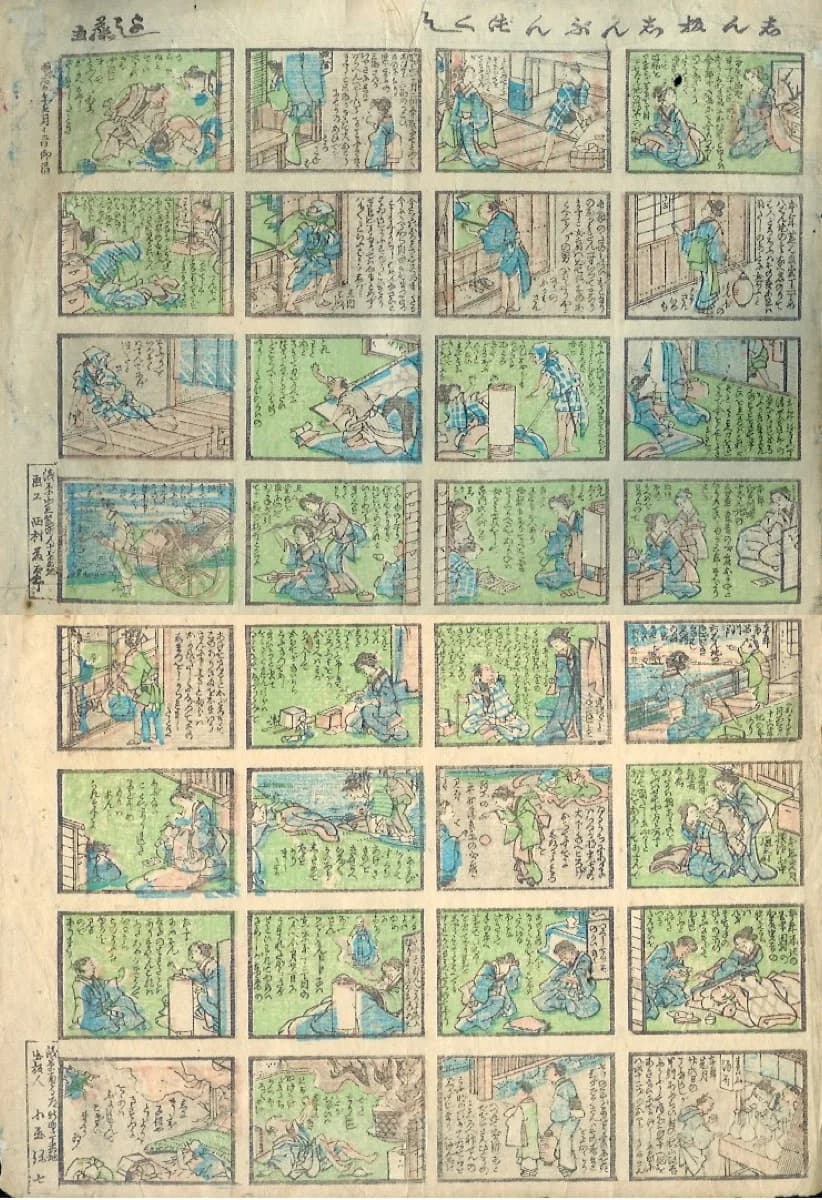
Utagawa Yoshifuji, e-shinbun picture newspaper sheet, c. 1876 — a ruled grid of thirty-two small equal frames in four columns and eight rows, each showing figures in kimono in rooms or streets, washed with green, blue and pink, with running Japanese narration filling the space around them
Utagawa Yoshifuji (Nishimura Tōtarō, 1828–1887), Shin-ban Shinbun-zukushi, an e-shinbun (picture newspaper) sheet, c. 1876. Thirty-two equal frames in a ruled grid, four across and eight down, read in order like a page of news. Every frame fills the paper its figures leave with running hiragana narration, and the colour is laid by hand over a thin woodblock line. Via Wikimedia Commons, public domain.→
Shidō Nanten, newspaper cartoon, 1912 — an army officer in a peaked cap striding past a gate of two posts and a crossbar with a sabre slung through it, his uniform, the posts and the sword filled with an even mechanical dot pattern inside firm black outlines, the boots in a coarser stipple
Shidō Nanten, cartoon on the army division-increase dispute, Jiji Shinpō, November 1912. The uniform, the gate posts and the sabre are filled with one even mechanical dot screen that stops dead at the contour; the boots carry a coarser stipple. The grey does not model the body — folds are drawn over it in line — which is the principle later sold to cartoonists as screentone. The kanji on the posts and blade label the political allegory. Via Wikimedia Commons, public domain.→
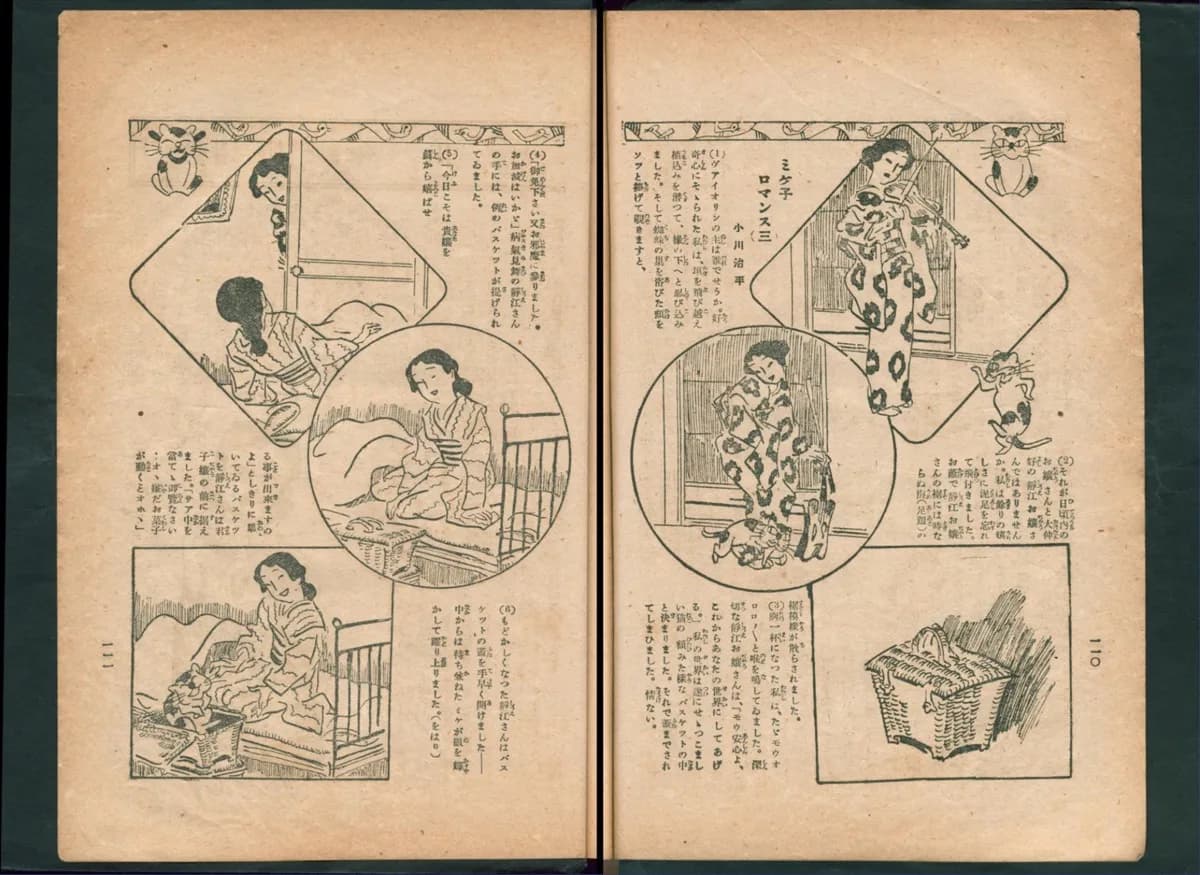
Ogawa Jihei, Mikeko Romance episode 3, Shōjo Gahō, 1920 — a two-page magazine spread on yellowed paper with diamond-, circle- and rectangle-shaped picture frames overlapping one another, showing a young woman in patterned kimono, a violin, a cat and a wicker basket, with numbered vertical narration set between the frames
Ogawa Jihei, Mikeko Romance, episode 3, Shōjo Gahō, July 1920. A girls' magazine spread whose frames are a diamond, a circle and a rectangle on each page, the circle laid over the diamond — shaped, overlapping panels a generation before postwar shōjo manga made them its signature. The numbered narration sits outside the frames, and a decorative band with cats' faces crowns each page. Scan from Kikuyo Town Library, via Wikimedia Commons, public domain.→

Frequently asked questions

What is the origin of manga?

Manga grew out of several older Japanese picture traditions rather than one invention. The word, meaning 'whimsical' or 'random pictures', was in print by the 1790s and was made famous by Katsushika Hokusai's sketchbooks, published from 1814. Comics in the modern sense arrived in the Meiji period, when Western satirical magazines such as Charles Wirgman's Japan Punch (from 1862) inspired Japanese cartoonists; Kitazawa Rakuten's newspaper strips from 1902 are usually taken as the start of the modern medium. Postwar story manga is conventionally dated from Osamu Tezuka's Shin Takarajima (New Treasure Island), drawn with Sakai Shichima in 1947.

Did Hokusai invent manga?

Katsushika Hokusai did not invent manga: he popularised the word, not the form. His Hokusai Manga, fifteen woodblock-printed volumes issued between 1814 and 1878, are sketchbooks of people, animals and objects with no panels, no speech and no story told from picture to picture. What modern manga inherited from them is the name and a habit of drawing the human body in motion from every angle. The comic strip itself came to Japan with Western cartooning in the late nineteenth century.

Why is manga black and white?

Manga is black and white because of how it is published. Stories are serialised first in thick weekly or monthly magazines printed cheaply on low-grade paper, where colour would multiply the cost of hundreds of pages per issue, and then collected into paperback volumes called tankōbon. Artists answered the limitation with a full vocabulary of black-and-white values: solid black fills, opaque white highlights, ruled lines for speed and emphasis, and adhesive screentone for every shade of grey.

How is screentone applied to a manga page?

Screentone is a transparent adhesive sheet printed with a fine pattern of dots or lines. A manga artist lays it over the inked drawing, cuts around the shape with a craft knife, peels away the excess and burnishes the rest down, so the area prints as a flat grey stopped hard at the inked contour. Graded sheets give skies and backgrounds, and scratching the tone with a blade makes highlights. Since the 2000s most professionals do the same thing in software, which simulates real dot screens.

What pens do manga artists use?

Traditional manga artists ink with dip pens: steel nibs fitted into a holder and dipped in black ink. The G-pen is a flexible nib whose line swells under pressure and tapers as it lifts, used for figure contours; the maru-pen, or mapping pen, draws the finest lines, from hair and eyelashes to ruled speed lines; the stiffer saji-pen and kabura-pen give more even lines for objects and backgrounds. Large black areas are filled with a brush or marker, and white paint restores highlights.

This tradition became a comic style

We studied plates like these and distilled what makes them work into rules a machine must follow — and a chess game can be rendered in.

From Bill Gates vs Magnus Carlsen (2014) — a full chess game rendered end to end.

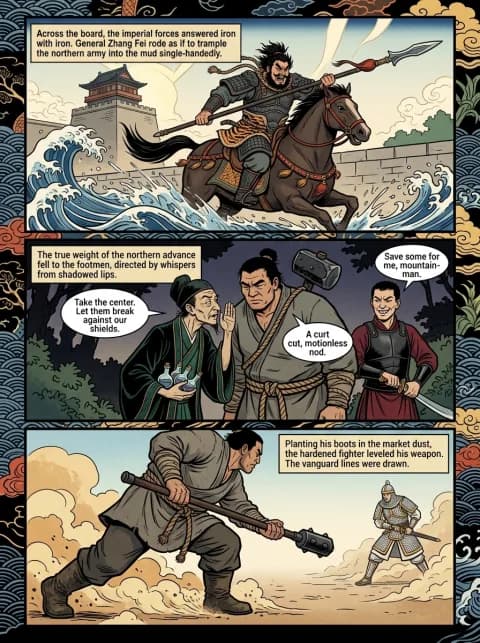
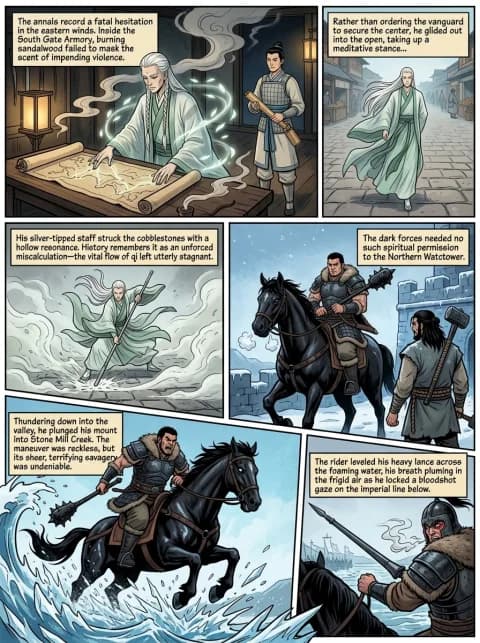
Comic page 1 rendered from Bill Gates vs Magnus Carlsen, 2014Comic page 2 rendered from Bill Gates vs Magnus Carlsen, 2014Comic page 3 rendered from Bill Gates vs Magnus Carlsen, 2014

See this game’s comics →